“National Identity After Communism: Hungary’s Statue Park,” in Cezar M. Ornatowski & Noemi Marin, eds., Rhetorics of ”1989”: Rhetorical Archaeologies of Political Transition, a special issue of Advances in the History of Rhetoric, (2015, in press). This article analyzes the development of national identity and political ideology in Hungary’s Szoborpark (Statue Park), a collection of Soviet-era statues relocated from th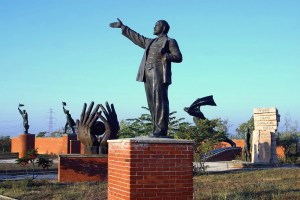 e city streets and public squares of Budapest in 1993. Although a narrative of the Cold War and the theory of post-communism enable understandings of the park as a decisive break with the past, this article argues that Statue Park constructs a more ambivalent sense of politics, identity, and history in Hungary. By showing that the park represents a number of conflicting and unresolved features of Hungarian national identity and politics, the article helps demonstrate the way that a sweeping historical narrative like the Cold War can produce inaccurate understandings of local political developments in post-Soviet countries.
 Matthew deTar