How does human rights discourse navigate the tension between its promise of religious pluralism and its commitment to secular pluralism? In March 2008,Turkey’sConstitutional Courtwas faced with the question of whether to shut down the country’s governing AK Party for anti-secular activities. Stemming partly from the Party’s prop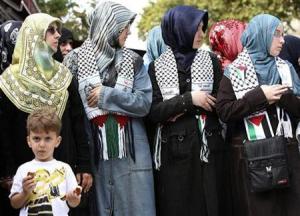 osed elimination of a headscarf ban in public universities, the case provoked the European Union (EU) to argue that a ban would compromise the religious rights and freedoms of Turks. In the end, the AK Party did prevail, although not without cost – its public financing was cut in half. While the EU and AK Party appeared to argue with a single voice, this essay contends that AK Party’s discourse figured a profound shift in national memory and identity inTurkey, a turn that may well be at odds with the EU’s human rights-based defense of religious tolerance. As its discourse of religious rights operates in tandem with other concepts central to liberalism, such as “secularism,” the case made by EU officials is limited, particularly in the political realm. Tracing how the AK Party disavows this boundary when it argues for religious freedom in light of Turkish history, this essay suggests that the tension between the EU’s discourse of religious rights and domestic Turkish political discourse underscores the precise ways in which a Western-liberal concept of “human rights” can elide the cultural dynamics on which its promise may rest.
-
Subscribe
Subscribed
Already have a WordPress.com account? Log in now.
 Matthew deTar